


Sports broadcasting has traditionally relied on Outside Broadcast (OB) vans to deliver live coverage. While OB vans provide powerful on-site production capabilities, they also come with high costs, heavy logistics, and long setup times.
Today, modern broadcast technology allows sports events to be covered professionally without deploying an OB van. Using portable transmission systems, remote production workflows, and IP-based infrastructure, broadcasters can deliver high-quality live coverage with greater flexibility and efficiency.
In this article, we explore how sports events can be covered without OB vans and what technologies make it possible.
Why Move Away From OB Vans?
OB vans have long been the standard for live sports production, but they come with several limitations:
High operational and rental costs
Large technical crews required on-site
Transport and setup logistics
Limited flexibility in smaller or remote venues
For many sports events, especially regional matches, tournaments, and recurring fixtures, these challenges can make OB vans impractical.
Modern Alternatives to OB Van Production
Advancements in broadcast technology have introduced new approaches that reduce reliance on traditional OB infrastructure.
Portable Transmission Systems
Portable transmission units allow live video to be sent directly from the field to a production center.
Solutions from LiveU use cellular bonding to combine multiple network connections, ensuring reliable video transmission even in dynamic environments.
These systems eliminate the need for large transmission setups and can be deployed within minutes.
Remote Production Workflows
Remote production allows the majority of technical operations to be handled from a centralized control room instead of on-site.
With this approach:
Cameras capture the event on location
Video feeds are transmitted to a production hub
Directors, editors, and engineers manage production remotely
This significantly reduces the number of crew members required at the venue.
PTZ and Lightweight Camera Setups
Modern camera systems make it easier to cover sports events with fewer resources.
Common setups include:
PTZ cameras controlled remotely
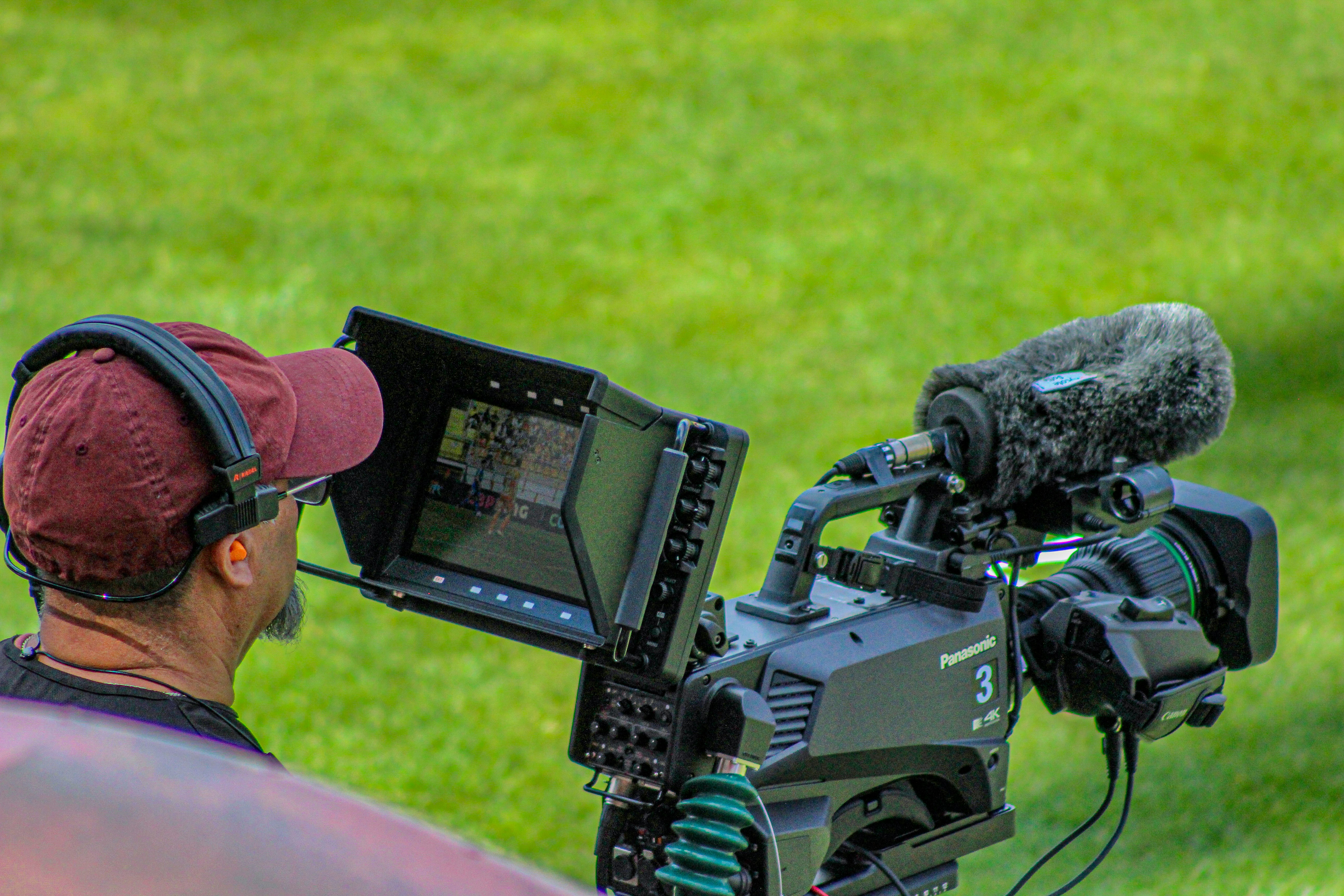
Lightweight broadcast cameras
Fixed camera positions for wide coverage
These configurations reduce the need for large camera crews while maintaining professional production quality.
Key Technologies Enabling OB-Free Sports Coverage
Several technologies work together to replace traditional OB workflows.
Cellular Bonding
Cellular bonding combines multiple mobile networks into a single stable connection, improving reliability and bandwidth for live transmission.
Cloud and IP-Based Production
Cloud-based systems allow production teams to manage video switching, graphics, and streaming from centralized locations.
This reduces the need for physical production infrastructure at the venue.
Centralized Production Control
By moving production to a central hub, organizations can:
Manage multiple events simultaneously
Reduce operational costs
Maintain consistent production standards
Benefits of Covering Sports Without OB Vans
Lower Costs
Eliminating OB vans reduces expenses related to equipment, transport, and large production crews.
Faster Setup and Deployment
Portable systems can be set up quickly, making them ideal for fast-paced sports environments.
Greater Flexibility
Broadcasters can cover events in smaller venues, remote areas, and locations where OB vans cannot operate easily.
Scalability
Production teams can scale coverage by adding more cameras or connecting multiple venues to a single production center.
When OB Vans May Still Be Needed
While modern workflows offer many advantages, OB vans still play a role in certain scenarios:
Large-scale international sports events
Productions requiring extensive on-site infrastructure
Complex multi-camera switching environments
Situations where maximum redundancy is required
For these cases, OB vans continue to provide unmatched on-site capabilities.
Hybrid Sports Production Models
Many broadcasters now use a hybrid approach that combines modern technologies with traditional infrastructure.
This may include:
Portable transmission systems for field feeds
Remote production for centralized control
Limited on-site equipment for critical functions
This model provides a balance between flexibility and production depth.
Professional Implementation Matters
Successfully covering sports events without OB vans requires proper system design, reliable connectivity, and seamless integration between equipment and workflows.
Sourcenet Systems Limited helps sports organizations, broadcasters, and event producers implement modern broadcast solutions that reduce reliance on OB vans while maintaining high production quality.
Conclusion
Modern broadcast technology has made it possible to cover sports events without relying entirely on OB vans. By using portable transmission systems, remote production workflows, and flexible camera setups, organizations can deliver professional live coverage with lower costs and greater efficiency.
As sports broadcasting continues to evolve, these solutions provide a scalable and future-ready approach to live production.
If you are planning to cover sports events using flexible and cost-effective broadcast solutions, **Sourcenet Systems Limited can help you design and deploy the right setup for your needs.
Contact us to discuss your requirements or request a quote for sports broadcast solutions.**